By Camp & Trail Guide
Colorado is the second-ranked hiking state in the United States, second year running, in the KURU 2026 state hiking ranking cited in the research for this guide, with a score of 83.9. That ranking, built from trail and weather data, is a platform signal rather than a search count, but it captures what Colorado campers already know: the state offers high-altitude hiking, national-park campgrounds, and dispersed camping on a scale that rewards planning for altitude as much as for distance. This is a research-based guide, and every figure below comes from the research source.
Rocky Mountain National Park and the Community Picks
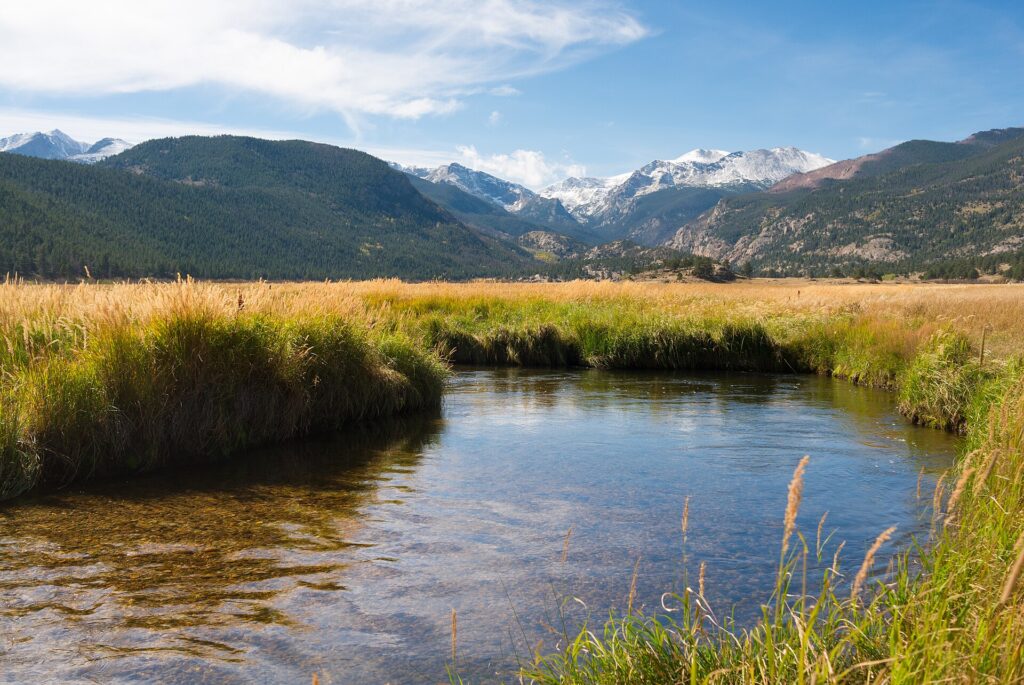
Rocky Mountain National Park is Colorado’s national-park anchor, and its East Portal campground appears on The Dyrt’s National Park Neighbors list, marking it as an alternative when the park’s most sought-after campgrounds are full. Colorado also appears in The Dyrt’s Top 10 in the United States, with Shavano Mountain at number eight. Those two community signals point in the same direction: Colorado’s best camping is not only inside the national park boundary, but also in the national-forest and public-land campgrounds around it. When Rocky Mountain campgrounds are full, the neighbor and dispersed options nearby are the realistic plan, not a second attempt at the same sold-out site.
Before you reserve any Colorado campground, check the official site or listing for its current fee, reservation window, site length limits, and hookup situation. This guide lists named Rocky Mountain campgrounds with their fees, reservation windows, and length limits in the ‘Named campgrounds’ section below. Confirm them for your specific site before you book.
Named campgrounds: fees, reservations, and limits
The figures below come from the National Park Service’s Rocky Mountain National Park camping page and from Recreation.gov campground listings. Summer fees: standard non-electric sites $35 per night, electric sites $55 per night; Longs Peak tent-only sites without water $30 per night; Glacier Basin group sites $50, $60, or $70 per night by size. Winter fees: standard sites $30 per night, electric sites $55 per night. Access and Senior pass holders receive a 50 percent discount on standard sites.
Moraine Park Campground – the park’s largest campground and the only one open in winter. Summer reservations are required; in winter it is first-come, first-served. The largest sites take RVs and trailers up to 40 feet, but limits vary by individual site, and the listed maximum includes any hitch and tow vehicle, so measure the whole rig. Electric hookup sites are in Loops B and C. There are no water hookups at any campsite in the park.
Glacier Basin Campground – summer reservations required. The largest sites take RVs and trailers up to 35 feet, but many sites are smaller, so check the individual site. Group sites are available here at $50, $60, or $70 per night by size. Glacier Basin is closed for the 2026/2027 winter season.
Aspenglen Campground – summer reservations required. Recreation.gov states vehicles larger than 30 feet are not permitted in Aspenglen campground, and the maximum vehicle-plus-trailer length (vehicle plus trailer plus hitch) is 30 feet, so measure the whole rig. Individual sites vary, so check the specific site on Recreation.gov before you book.
Timber Creek Campground – on the west side of the park, summer reservations required. Total vehicle length limit 30 feet: RVs and combined vehicles and trailers over that limit cannot stay here. Sites have no hookups. There is a seven-night limit for all campgrounds during the summer season, counting all nights inside the park together.
Longs Peak Campground – tents only, first-come, first-served (the only first-come, first-served campground in the park), $30 per night, no water.
Summer 2026 dates and the 2027 outlook – Moraine Park, Timber Creek, and Aspenglen opened for summer camping on May 21, 2026. Aspenglen closed at noon on September 28, 2026; Timber Creek closed at noon on October 5, 2026; Moraine Park’s summer season ended at noon on October 19, 2026, when it switched to winter camping (first-come, first-served, from 1 pm that day). Summer 2027 dates for all four campgrounds were still to be announced, with the park advising visitors to check back in mid-November. Summer reservations open six months ahead of the camping date, through Recreation.gov or 1-877-444-6777, and cannot be made in person at a campground or visitor center.
Fees and Reservations
Named Rocky Mountain fees and booking windows are listed in the ‘Named campgrounds’ section above; confirm the current figures on the official site for the campground you want. For rough budgeting only, independent cost pages cited in our research put public developed sites generally at roughly $18–$45 per night in peak season and $12–$28 in shoulder season, and private full-hookup sites at roughly $40–$60. Those are general ranges, not Colorado prices. Demand concentrates in the summer months and on holiday weekends, and more than half of campers reported difficulty booking because campgrounds were full, according to The Dyrt’s 2026 report. If your dates are flexible, shoulder-season travel is a strong strategy: 1 in 5 campers in the research cited here said shoulder season is the best time to camp, and off-season travel avoids the worst crowds.
High Altitude: 14ers and Acclimatisation
Colorado’s high-altitude content is what separates it from generic camping guides: 14ers, the state’s peaks over 14,000 feet, and altitude acclimatisation. Altitude changes everything about a hike. Air is thinner, effort feels harder, weather changes faster, and a hiker who is comfortable at lower elevations may need time to adjust before attempting a high summit. Build acclimatisation into your itinerary: spend a day or two at moderate elevation before a big high-altitude hike, plan a turnaround time, and be ready to turn back if altitude symptoms or weather demand it. Do not let a distance estimate, or a summit goal, override what your body and the weather are telling you.
Use the hiking calculator below with altitude and elevation presets in mind. The calculator estimates time from distance and elevation gain, using Naismith’s Rule of roughly 3 miles per hour on flat ground plus 1 hour per 2,000 feet of ascent, and estimates calories from weight, time, and terrain. On a 14er, the elevation-gain term dominates the estimate, which is exactly why a short-looking summit route can take far longer than its mileage suggests. Treat the outputs as planning estimates with a margin of error, and check the official site for current trail and weather conditions before any high-altitude hike.
Sleeping-Bag Module: Cold Nights at Altitude, Even in Summer
Cold nights at altitude, even in summer, are the sleeping-system lesson Colorado teaches. A summer day at high elevation can be warm, and the same night can be cold enough to make a summer-weight bag miserable. The research for this guide states the recurring safety rule for sleeping bags: choose a bag rated 10–15 degrees Fahrenheit colder than the lowest temperature you expect. Buy on the EN/ISO comfort rating, not the limit or extreme rating, and pair the bag with a pad of appropriate R-value: roughly 1–2 for summer, 3–4 for three-season use, and 5 or more below freezing or on snow, with R-values stacking when pads are layered. Use the sleeping-bag calculator below to check your bag against the night temperatures you actually expect at altitude, not the daytime high.
The 20-degree Fahrenheit bag is the recurring three-season default in the research, and it is a sensible starting point for Colorado summer camping at altitude, adjusted colder if your site is higher or your dates are earlier or later in the season. Check the forecast for your specific elevation before you pack, because a valley forecast does not describe a high camp.
Dispersed Camping in Colorado: The Local Rule
Colorado’s dispersed camping sits mostly on national-forest land, and the local rule stated in the research for this guide is the national-forest rule: most national forests allow 14 days in 30. That is the rule to carry for Colorado national forests, stated with its locality, not as a generic line. Before dispersed camping, confirm which national forest manages the land, check its official rules, including any local stay or fire restrictions, and check fire restrictions for the day. Camp on durable surfaces, pack out everything, and do not camp on fragile alpine ground. If the local rule is not clear, use a developed site instead.
Best Season
Summer is the peak season, with the heaviest demand in July and August and on holiday weekends. High-altitude trails may hold snow into early summer, so check current trail conditions before a high hike, even in the main season. Shoulder-season travel offers lighter crowds and cooler nights, which makes the sleeping-bag check above even more important. Winter in the Colorado high country is a snow-season trip, with road and facility closures, so check official conditions before a winter visit.
Plan With the Calculators
- Hiking time and calories calculator — run altitude and elevation presets for Colorado trails and 14ers before you set out.
- Sleeping-bag temperature calculator — check your bag against cold nights at altitude, even in summer, using the 10–15 degrees Fahrenheit colder rule.
- Camping trip cost calculator — compare developed sites with dispersed nights, plus fuel, food, and a per-person split.
- Towing and payload calculator (Colorado preset) — check payload, tongue weight, and mountain towing for your rig.
Gear Worth Reading Before You Go
- Sleep system: sleeping bag temperature and pad R-value — bag and pad as a pair, not a bag alone.
- Trail runners vs hiking boots — footwear choice, with boots preferred for heavier packs and technical ground.
- Best backpack for backpacking — pack weight on elevation-gain hikes.
- Ultralight tent materials: nylon, polyester, DCF, silpoly — shelter weight and weather performance at altitude.
FAQ
Why is Colorado ranked so highly for hiking?
Colorado ranks second among US states for hiking in the KURU 2026 ranking cited here, with a score of 83.9, second year running, based on trail and weather data.
What is the dispersed rule in Colorado national forests?
Most national forests allow 14 days in 30. That is the national-forest rule stated in the research; confirm the official rules for the specific forest you plan to use.
Do I need a warmer sleeping bag in Colorado in summer?
Yes, plan for it. Nights at altitude are cold even in summer. Choose a bag rated 10–15 degrees Fahrenheit colder than the lowest temperature you expect, and buy on the comfort rating.
What makes a 14er different from a normal hike?
Altitude. Thinner air, faster weather changes, and major elevation gain mean a short-looking summit route takes far longer than its mileage suggests. Acclimatise, plan a turnaround time, and check current conditions.
Plan the whole trip with the tools at Camp & Trail Guide’s tools hub.