
By Camp & Trail Guide
Ask ten experienced hikers what to wear on your feet and you will get two confident, opposite answers. One camp swears by boots. The other has not worn boots in years. Both are right — for different hikes. The footwear debate is not really about brands. It is about pack weight, terrain, ankle history, and how wet your feet are going to get. Get those four factors right and the choice mostly makes itself.
Check the current spec before you buy: weights, waterproofing, and prices change as manufacturers revise models. Confirm the current manufacturer spec sheet for the exact shoe or boot you are considering.
Why trail runners took over thru-hikes
Trail runners dominate thru-hikes, and the numbers explain why. 2026 guides put trail runners at roughly 250–450 grams lighter per pair than boots. That saving is per step, thousands of times a day, and it adds up to noticeably less fatigue. Trail runners also dry 3–5 times faster than boots. On a trail with stream crossings, rain, or wet meadows, a boot that stays wet all day is a blister risk; a trail runner that dries in an hour or two is a different experience entirely.
Comfort is the third factor. Trail runners need little or no break-in, flex with your foot, and feel familiar to anyone who runs or walks in athletic shoes. For maintained trails with a light to moderate pack, they are, for most hikers, the more comfortable and more practical choice — which is why they have become the default on long-distance trails.
When boots still earn their place
Boots remain preferred in three situations, and they are worth taking seriously:
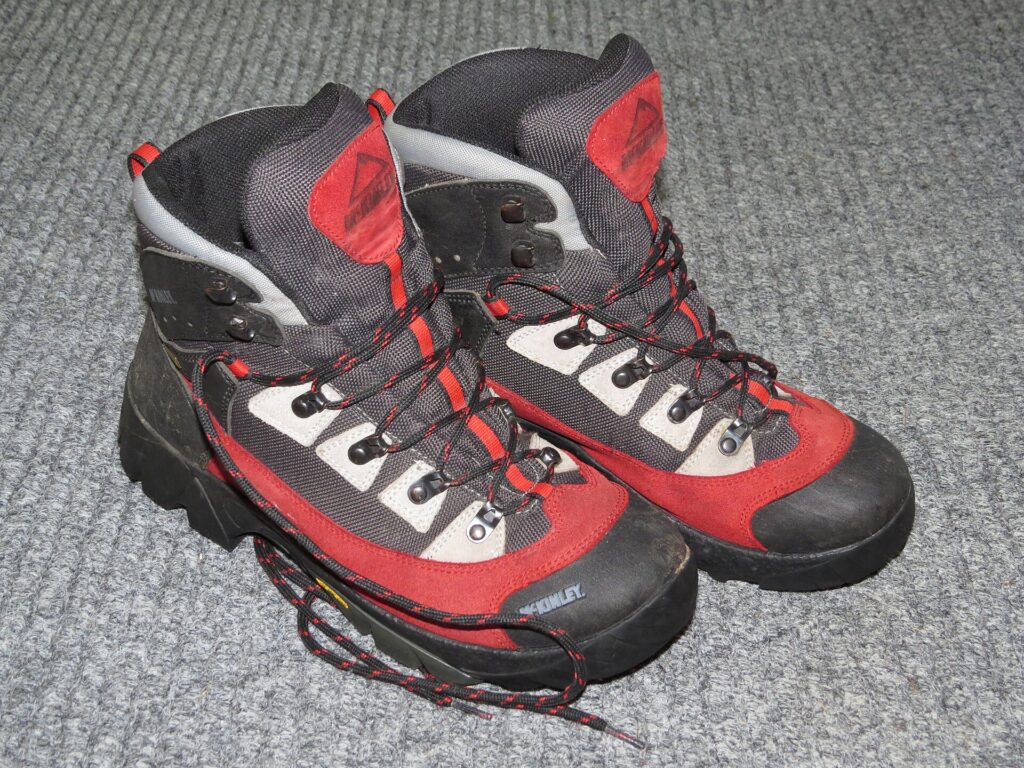
- Heavy packs: above roughly 15 kg of pack weight, the extra support and stiffer sole of a boot help control the load and protect your feet over rough ground.
- Technical scrambling: on steep rock, scree, and off-trail terrain, a stiffer boot with a more protective rand and better edging gives grip and protection a soft runner cannot.
- Confirmed ankle instability: if you have a history of ankle sprains or a clinician has identified instability, the support of a higher boot is a genuine benefit — not just tradition.
Note what is not on that list: “ankle support” as a general, unqualified claim. For hikers without ankle problems, on maintained trails with a moderate pack, the evidence for boots preventing sprains is much weaker than the marketing suggests. Strong ankles, built by walking, and a lighter pack do more for most hikers than a tall boot.
The 2026 consensus: light mids, not heavy leather
The 2026 “best boot” consensus centres on light mids rather than heavy leather boots. Named examples in the guides include the Salomon X Ultra 5 Mid GTX and the Quest 5 GTX — mid-height boots that give some ankle coverage and weather protection without the weight and break-in of traditional full-leather boots. That shift is the market’s answer to the runner-vs-boot debate: a middle ground that keeps the support many hikers want, at a weight much closer to a runner.
Heavy full-leather boots are losing share to these light mids in 2026 guides. They still have a place — for heavy loads, rough off-trail work, and winter conditions — but for most three-season hiking, they are more boot than the hike requires. Frame this as a share shift, not a disappearance: leather boots are not obsolete, they are simply no longer the default.
Comparison at a glance
| Factor | Trail runners | Light mid boots | Heavy leather boots |
|---|---|---|---|
| Weight per pair | Lightest, roughly 250–450 g less than boots | Middle | Heaviest |
| Drying speed | Fastest, 3–5x faster than boots | Moderate | Slowest |
| Support | Least, relies on foot strength | Good balance | Most, for heavy loads and rough terrain |
| Best for | Maintained trails, light packs, thru-hikes | Most three-season hiking | Heavy packs, scrambling, winter |
A practical decision rule
Start with your pack weight. If it is well under 15 kg and your trails are maintained, trail runners are the sensible default. If it is above 15 kg, or your route involves scrambling, or you have confirmed ankle instability, look at boots — and start with light mids before jumping to heavy leather. Then consider water: frequent stream crossings and wet trails favour runners for their drying speed, while cold, muddy, or snowy conditions favour boots for protection and warmth.
Footwear also affects pace and fatigue, which is why it belongs in trip planning, not just in the gear closet. Our hiking calculator helps with time and pace planning for your route — note that footwear is a pace and fatigue consideration here, not a calorie input, and this guide makes no calorie claim for any shoe. For trails to test your choice on, read our area guides for camping in Yosemite and camping in Zion National Park, where maintained trails, elevation gain, and desert heat all test footwear in different ways.
Frequently asked questions
Are trail runners really better than hiking boots?
For maintained trails with a light to moderate pack, usually yes: they are roughly 250–450 g lighter per pair, dry 3–5 times faster, and dominate thru-hikes for those reasons. For heavy packs, scrambling, or ankle instability, boots are the better choice.
At what pack weight should I switch to boots?
The guides use roughly 15 kg as the threshold: above that weight, boots’ support and stiffer soles help control the load. Below it, most hikers are fine in trail runners on maintained trails.
Do I need waterproof boots?
Waterproof membranes keep light rain and dew out but also slow drying once water gets in over the cuff. In warm, wet conditions, a quick-drying non-waterproof runner often leaves you with drier feet by the end of the day.
Are heavy leather boots outdated?
Not outdated, but no longer the default. The 2026 consensus favours light mids like the Salomon X Ultra 5 Mid GTX and Quest 5 GTX for most three-season hiking, reserving heavy leather for heavy loads, rough terrain, and winter.
Choose for your pack and your trail — then plan the hike with the Camp & Trail Guide tools hub and its hiking calculator.