By Camp & Trail Guide
Zion is now the second most visited national park in the United States. The National Park Service recorded 4,984,525 recreation visits in 2025, putting Zion ahead of Yellowstone, a change from the older order many travellers still expect. That shift matters for planning: Zion is no longer the quieter alternative to the biggest parks. It is one of them, and its campgrounds, shuttle system, and most famous hikes all need advance planning. This is a research-based guide. Figures are used only where the research source for this guide states them, and anything else is flagged for checking on the park’s official site.
Campgrounds and RV Parks
Watchman Campground is Zion’s key reservable campground, and its electric sites are a central part of the planning story: they are in demand, and they are the sites many RV travellers want first. According to the research cited here, Watchman reservations open 6 months ahead at 8 a.m. Mountain Time. That window is the moment to book, not a vague suggestion to book early. Set a reminder for it, know which site sizes you can use, and have a backup date ready.
Private RV parks and campgrounds near the park, in Springdale and the surrounding towns, are the overflow layer when Watchman is full. This is exactly the “national park neighbors” pattern: when the in-park campground is booked, the parks just outside the boundary carry the trip. When comparing them, check hookups, site length, and price separately for each park. Zion’s in-park reality includes no-hookup sites, so do not assume that a site inside the park will offer the same connections as a private RV park outside it. Confirm hookups and length limits for your specific site on the park’s official site or the private park’s own listing before you book.
Fees and Reservations
Watchman opens 6 months ahead at 8 a.m. Mountain Time. That is the reservation fact stated in the research for this guide. For any other Zion campground fee or window, check the park’s official site, because this guide does not invent a figure the source does not state. For rough budgeting only, independent cost pages cited in our research put public developed sites at roughly $18–$45 per night in peak season and $12–$28 in shoulder season, and private full-hookup sites at roughly $40–$60. Those are general ranges, not Zion prices, so confirm the exact fee before you travel.
Demand concentrates in the warmer months and on holiday weekends, and more than half of campers reported difficulty booking because campgrounds were full, according to The Dyrt’s 2026 report. If Watchman is full on your dates, the private parks near the park and the dispersed options on nearby public land are the realistic alternatives, not a second attempt at the same sold-out site.
Hiking: Angels Landing and The Narrows
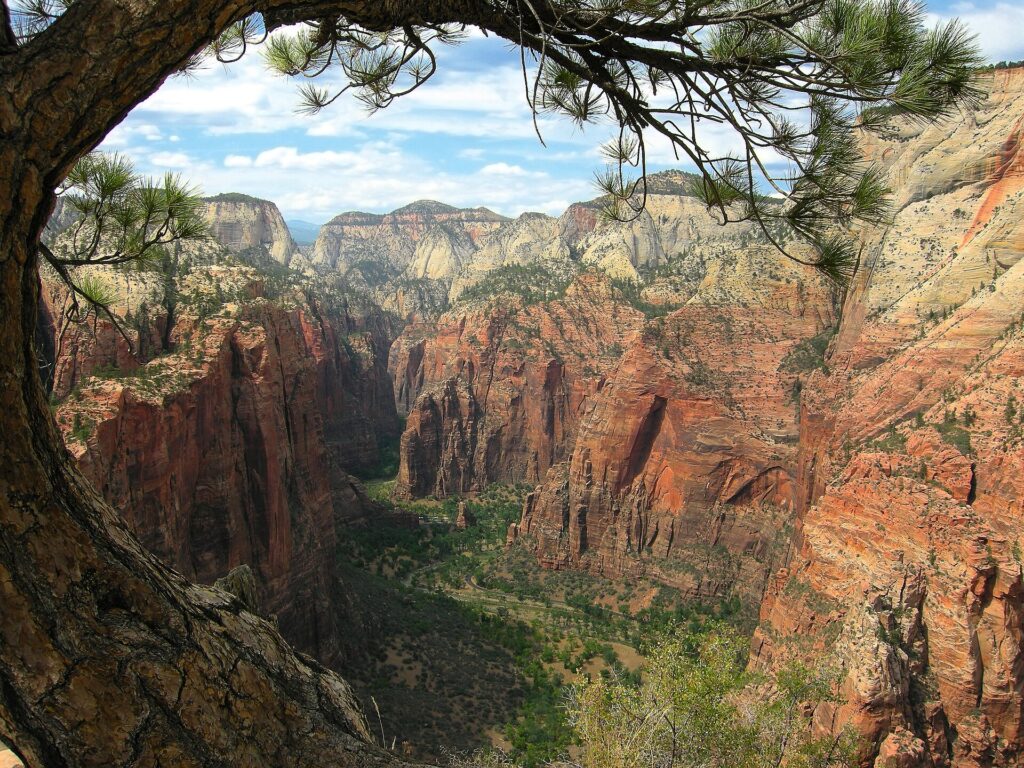
Two hikes define Zion planning. Angels Landing requires a permit through a lottery, so it cannot be treated as a walk-up hike. Enter the lottery in good time, check the park’s official site for the current lottery windows and rules, and have an alternative hike ready if you do not draw a permit. The Narrows is the park’s other signature hike, a river walk through a slot canyon where water levels and flash-flood risk decide whether the hike is sensible on a given day. Check current conditions on the park’s official site before you go, and do not rely on a guide’s general description in place of that day’s conditions.
Use the hiking calculator below with an Angels Landing preset mindset: distance and elevation gain together decide how long the hike takes, not distance alone. The calculator estimates time and calories from those inputs, and its outputs carry a margin of error, so plan a turnaround time and carry enough water for desert hiking, where water weight quickly becomes the heaviest thing you carry.
Towing and the No-Hookup Reality
Zion is a towing-planning park as much as a hiking park. Before you reserve, confirm the site’s length limit and its hookup situation, because a site that fits your rig on length may still offer no hookups, and that changes your power and water plan for the stay. Run your combination through the towing calculator with the Zion preset: check payload against your door-sticker figure, not the brochure; check tongue weight against the 10–15% band for a conventional trailer; and apply the community 80% safety margin, keeping your loaded trailer at or below 80% of your maximum tow rating where possible. Payload, not the headline tow rating, is repeatedly shown to be the binding constraint, especially on half-ton trucks.
If you are towing an RV to Zion and plan to stay without hookups, read the power and battery guides linked below before you arrive. A portable power station or an RV solar and lithium setup changes what a no-hookup stay can support, and it is much easier to plan that at home than to improvise at the campground.
Dispersed Camping Near Zion
Dispersed camping is a major part of the Utah story, and it applies around Zion as well. The local rule stated in the research for this guide is the BLM rule: 14 days in 28 days, then move 25 or more miles. That is the rule to carry for BLM land in this area, not a generic “14 days” line. Most national forests, by contrast, allow 14 days in 30. Before you dispersed camp, confirm which agency manages the land you plan to use, check its official rules, and follow Leave No Trace practices: camp on durable surfaces, pack out everything, and check fire rules for the day. In dry desert country, fire restrictions can change quickly.
Best Season
Demand peaks in the warmer months and on holiday weekends. Spring and autumn offer a strong balance of hiking weather and slightly lighter pressure than the summer peak, while winter brings quieter trails and colder nights. For The Narrows in particular, conditions, not the calendar alone, decide whether the hike is a good idea on a given day, so check the park’s official site for current water and weather information before you commit.
Plan With the Calculators
- Hiking time and calories calculator — run Angels Landing and other Zion hikes with distance, elevation gain, and pack weight before you set out.
- Towing and payload calculator (Zion preset) — check Watchman site limits, payload, and the no-hookup reality for your rig.
- Camping trip cost calculator — compare an in-park site with a private RV park near the park, plus fuel and food.
Gear Worth Reading Before You Go
- RV solar and lithium battery for boondocking — power planning for no-hookup stays.
- Best portable power station for camping and RV — sizing power by use, from phones to a fridge.
- Best water filter for backpacking — water planning for desert hikes.
- Trail runners vs hiking boots — footwear choice for Zion’s trails.
FAQ
Do I need a permit for Angels Landing?
Yes. Angels Landing uses a permit lottery. Check the park’s official site for the current lottery windows and rules, and have a backup hike ready.
When do Watchman reservations open?
Watchman reservations open 6 months ahead at 8 a.m. Mountain Time, according to the research cited in this guide. Book at that window, and keep a backup date.
Are there hookups at Zion’s campgrounds?
Do not assume so. Zion’s in-park reality includes no-hookup sites, and Watchman’s electric sites are the in-demand exception. Confirm hookups and length limits for your specific site before you book.
Can I dispersed camp near Zion?
On BLM land in this area, the stated rule is 14 days in 28 days, then move 25 or more miles. Confirm the managing agency and its official rules for the exact land you plan to use.
Plan the whole trip with the tools at Camp & Trail Guide’s tools hub.