By Camp & Trail Guide
Water is the heaviest thing you carry and the one thing you cannot do without. A good filter solves both problems: it lets you carry less water between sources, because you can refill and treat water on the trail, and it makes that water safe to drink. Water filters are one of the least controversial gear topics — the leading options are well established, the differences are clear, and the wrong choice is rarely dangerous if you follow basic safety rules. That makes this a good first gear decision for new backpackers.
Check the current spec before you buy: filter weights, lifespans, flow rates, and prices change as manufacturers revise models. Confirm the current manufacturer spec sheet for the exact filter you are considering.
The default: Sawyer Squeeze
The Sawyer Squeeze is the default answer across checklists and guides, and for good reason. It filters to 0.1 micron, which removes bacteria and protozoa — the organisms that cause most backcountry waterborne illness in the US — and it is rated for a lifespan of 100,000+ gallons, which for practical purposes is unlimited for an individual hiker. It weighs just 3 oz, screws onto a standard soft bottle or the supplied squeeze pouch, and has no moving parts to break and no batteries to die.
The squeeze design means you fill a dirty-water pouch, screw on the filter, and squeeze clean water into your bottle or pot. It is simple and reliable, but flow slows as the filter loads with sediment, and squeezing a pouch takes a little effort, especially with cold hands. Backflushing — pushing clean water backward through the filter with the supplied syringe — restores flow and is the maintenance habit that keeps a Squeeze working for years.
The fast-flow alternative: Katadyn BeFree
The Katadyn BeFree is the fast-flow alternative, at 2.3 oz. It uses a collapsible soft flask with the filter built into the cap: fill the flask, screw on the cap, and drink straight through it or squeeze it into another container. Flow is noticeably faster than a squeeze filter when both are clean, and the drink-through design is convenient on the move — you can filter and drink without stopping to set up a system.
The trade-off is lifespan and maintenance. The BeFree’s filter life is shorter than the Squeeze’s effectively unlimited rating, and its flow also drops with sediment. For most hikers on a few trips a year, either filter will last a long time. For thru-hikers filtering thousands of litres, the Squeeze’s lifespan advantage becomes a real factor. Both filters address bacteria and protozoa; neither, on its own, is rated to remove viruses, which are a much smaller concern in US backcountry water than bacteria and protozoa but matter in some international or heavily impacted sources.
Pump filters: when they still make sense
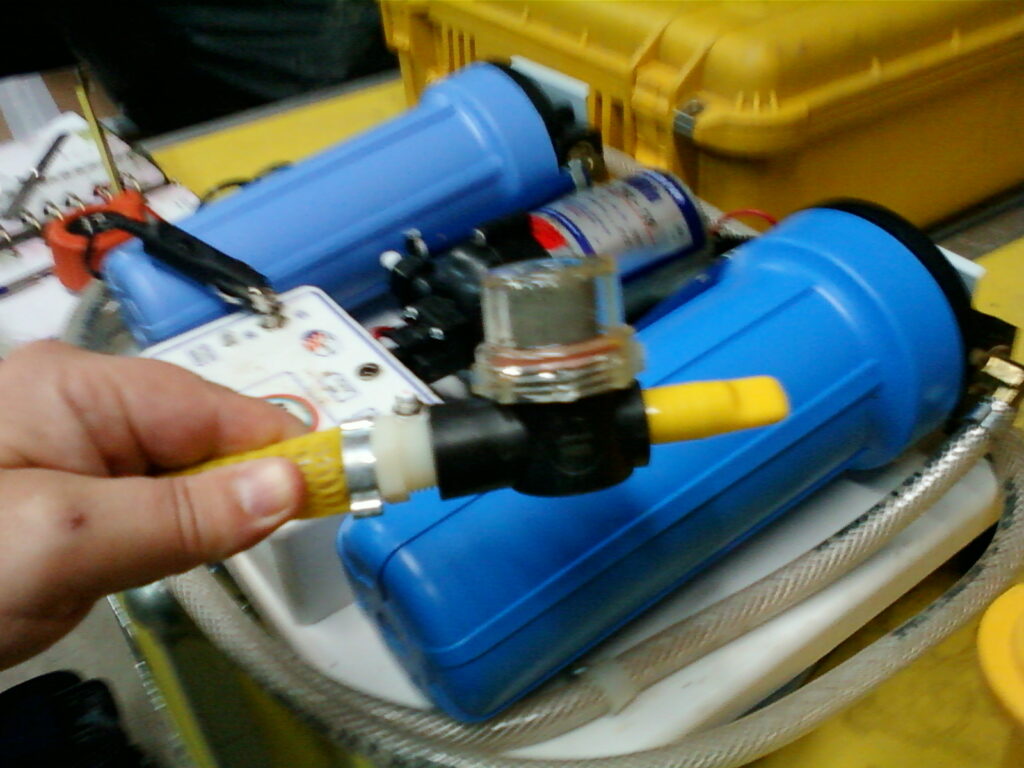
Pump filters are the older technology: a hand pump draws water through a cartridge into your bottle. They are heavier and bulkier than squeeze or fast-flow filters, and pumping takes effort. Their advantage is versatility — they can draw from shallow, awkward sources (a trickle, a muddy pool, a narrow crack) where filling a pouch is difficult, and many pump models include a carbon element that improves taste. For groups, for silty desert water, or for sources where a pouch simply cannot be filled, a pump still earns its weight. For most solo and pair hikers on established trails, a squeeze or fast-flow filter is lighter and simpler.
Comparison at a glance
| Filter | Weight | Filter rating | Lifespan | Best for |
|---|---|---|---|---|
| Sawyer Squeeze | 3 oz | 0.1 micron | 100,000+ gallons | Default for most backpackers |
| Katadyn BeFree | 2.3 oz | Fast-flow soft flask | Shorter than Squeeze | Fast drinking on the move |
| Pump filter | Heavier | Varies by model | Cartridge-based | Shallow sources, groups, silty water |
Backcountry water safety: the rules that matter
- Filter all backcountry water. Clear, cold, fast-moving water can still carry Giardia and other protozoa. Appearance is not safety.
- Know your sources. Plan water stops before the hike, and carry enough to reach the next reliable source — carried water weighs 2.2 lb per litre, making it the heaviest consumable you carry, so a filter that lets you refill often saves more weight than almost any other gear choice.
- Protect the filter from freezing. A frozen filter can crack internally and stop filtering effectively. In cold weather, keep it in a pocket or sleeping bag overnight.
- Carry a backup. A few purification tablets weigh almost nothing and cover a lost, frozen, or clogged filter.
- Respect local guidance. Some areas have specific advisories — mining contamination, algal blooms, or seasonal closures — that a standard filter does not address. Check with the land manager before your trip.
The filter’s weight feeds straight into your total load, so include it when you run the pack weight calculator — and remember that carried water at 2.2 lb per litre is the heaviest consumable in the pack, which is why refilling often beats carrying far. For trails where water planning is critical, read our area guides for camping in Utah’s Mighty Five and Moab, where desert sources are scarce, and camping in Montana and Glacier, where mountain streams are plentiful but still need filtering.
Frequently asked questions
What is the best water filter for backpacking?
For most backpackers, the Sawyer Squeeze is the default: 0.1-micron filtration, 100,000+ gallon lifespan, and 3 oz. The Katadyn BeFree at 2.3 oz is the fast-flow alternative for hikers who want to drink on the move.
Do I need to filter clear mountain stream water?
Yes. Clear, cold water can still carry bacteria and protozoa. Filter all backcountry water, regardless of how clean it looks.
How do I keep my filter working?
Backflush regularly with clean water, protect it from freezing in cold weather, and pre-filter very silty water through a bandana or cloth to keep sediment out of the cartridge.
Does a filter remove viruses?
Standard 0.1-micron squeeze and fast-flow filters target bacteria and protozoa, which are the main US backcountry concern. They are not generally rated for viruses; check the manufacturer’s rating and local guidance if virus risk is a concern for your source.
Drink safe, carry less — plan water and weight with the Camp & Trail Guide tools hub and its pack weight calculator.