By Camp & Trail Guide
Montana and Glacier National Park are a smaller-volume, higher-intent destination in the research for this guide: fewer visits than the top five parks, but travellers who come here tend to plan carefully, because Glacier’s roads and campgrounds impose real limits on vehicles. The park’s most famous road has a length restriction that decides whether your vehicle can drive it at all, and its main RV campgrounds have their own length and hookup limits. This is a research-based guide, and every figure below comes from the research source.
Apgar and St. Mary: The RV Bases
Apgar and St. Mary are Glacier’s standard RV bases, one on the west side of the park and one on the east. Apgar is the campground most often named first: it offers no hookups, and its limit is roughly 35–40 feet. That pair of facts, no hookups and a roughly 35–40-foot limit, should be checked against your rig before you book, because a larger rig, or a rig that depends on hookups, will need a different plan. St. Mary serves the same base role on the east side. Check the park’s official site for the current fee, reservation method, site length limits, and hookup details for each campground, because this guide does not state a Glacier campground fee the source does not give, and details differ by campground.
Private RV parks and campgrounds in the gateway towns around Glacier are the overflow layer when Apgar and St. Mary are full, and they are also the option for larger rigs or travellers who need hookups that Apgar does not offer. Price them alongside the in-park options in the trip-cost calculator, including fuel for the drive into the park each day.
Big Creek: The Neighbor Pick
Big Creek Campground in Montana, serving Glacier, ranks number two on The Dyrt’s National Park Neighbors list. That ranking marks Big Creek as a leading alternative to the fully booked parks themselves, and it is worth checking early in your planning, not as a last resort after Apgar and St. Mary are full. Confirm Big Creek’s current fee, reservation method, and site limits on the official listing before you travel, because this guide does not state a Big Creek fee the source does not give.
Going-to-the-Sun Road: The Vehicle-Length Restriction
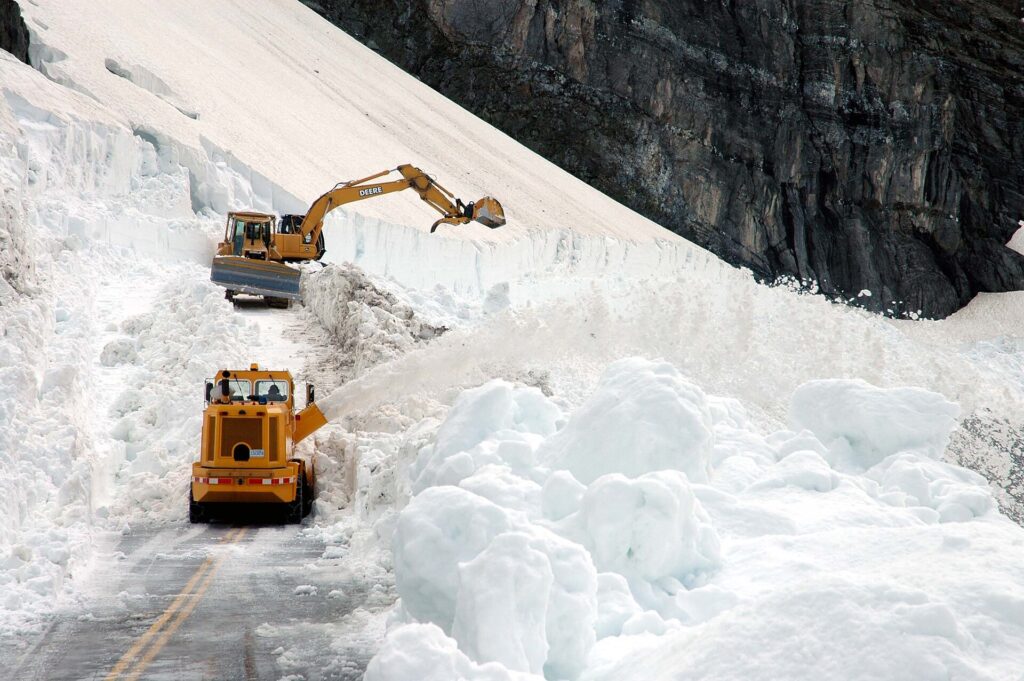
The Going-to-the-Sun Road vehicle-length restriction is the towing-relevant fact that defines Glacier planning. Vehicles on the road must be under 21 feet long. That restriction applies to the vehicle itself, so a tow vehicle and trailer combination that exceeds it cannot drive the road as a combination, and even a single vehicle over the limit cannot use it. If your vehicle is over 21 feet, plan to use the park’s shuttle system or another way of seeing the road, and check the park’s official site for the current restriction, vehicle rules, and seasonal road status before you travel. Do not assume the road is open or that your vehicle qualifies: check both.
Run your rig through the towing calculator with the Montana preset before you book. The calculator checks payload against your door-sticker figure, tow rating against your loaded trailer weight, combined gross weight, and tongue weight against your hitch limit and the 10–15% band for a conventional trailer, with the community 80% safety margin applied. Then compare the result with Apgar’s roughly 35–40-foot limit and the Sun Road’s under-21-foot restriction separately, because those are different limits for different purposes: one decides where you can camp, the other decides whether you can drive the park’s most famous road.
Fees
Check the park’s official site for the current fee for the Glacier campground you want, because this guide does not state a Glacier fee the source does not give. For rough budgeting only, independent cost pages cited in our research put public developed sites generally at roughly $18–$45 per night in peak season and $12–$28 in shoulder season, and private full-hookup sites at roughly $40–$60. Those are general ranges, not Glacier prices. The trip-cost calculator below lets you compare an in-park site with a gateway-town RV park on the same trip, and shoulder-season dates against peak-season dates, so the cost difference is visible rather than guessed.
Dispersed Camping in Montana: The Local Rule
Montana’s dispersed rule is stated distinctly in the research for this guide: Montana forests allow 16 days, in one guide’s account. That 16-day figure is specific to Montana forests as reported in that account, and it differs from the general pattern elsewhere, which is why it is stated with its source qualification rather than as a flat rule. Most national forests generally allow 14 days in 30, and BLM land follows a 14-days-in-28 rule, after which you must move 25 or more miles. Before dispersed camping in Montana, confirm which agency manages the land, check its official rules for the exact unit, and check fire restrictions for the day. If the local rule is not clear, use a developed site instead.
Best Season and Shoulder-Season Value
Summer is the peak season for Glacier, with the heaviest demand in July and August and on holiday weekends, and the Going-to-the-Sun Road’s seasonal opening shapes the whole summer window. Shoulder-season travel is the value play for this guide’s cost pairing: shoulder-season site rates are generally lower, crowds are lighter, and the trip-cost calculator shows the saving directly when you compare shoulder dates with peak dates. Shoulder travel also fits the national pattern in the research, where 1 in 5 campers said shoulder season is the best time to camp. But shoulder-season Glacier travel needs a conditions check: the Sun Road may not be fully open early or late in the season, and nights are colder, so check the park’s official site for current road status and weather before you travel, and pack a sleeping system for the night temperatures you actually expect.
Plan With the Calculators
- Towing and payload calculator (Montana preset) — check the Sun Road under-21-foot restriction, Apgar’s roughly 35–40-foot limit, and payload for your rig.
- Camping trip cost calculator — compare peak-season and shoulder-season costs, and in-park sites with gateway-town RV parks.
- Hiking time and calories calculator — estimate Glacier hike time and energy from distance, elevation gain, and pack weight.
Gear Worth Reading Before You Go
- Sleep system: sleeping bag temperature and pad R-value — cold Glacier nights, especially in shoulder season.
- Best cooler and ice strategy — food storage over a long park stay.
- Trail runners vs hiking boots — footwear for Glacier trails.
- Best portable power station for camping and RV — power for no-hookup stays at Apgar.
FAQ
Can I drive the Going-to-the-Sun Road in my RV?
Only if the vehicle is under 21 feet long. That is the road’s vehicle-length restriction stated in the research. Check the park’s official site for the current restriction and seasonal road status.
Does Apgar Campground have hookups?
No. Apgar offers no hookups, and its limit is roughly 35–40 feet, according to the research cited here. Check the park’s official site for current details.
What is Big Creek Campground?
Big Creek Campground in Montana, serving Glacier, ranks number two on The Dyrt’s National Park Neighbors list, marking it as a leading alternative when park campgrounds are full.
What is the dispersed rule in Montana forests?
Montana forests allow 16 days, in one guide’s account cited in the research. That differs from the general national-forest pattern of 14 days in 30, so confirm the official rules for the exact land you plan to use.
Plan the whole trip with the tools at Camp & Trail Guide’s tools hub.