By Camp & Trail Guide
An RV park near a national park is not just a backup when the in-park campground is full. For many rigs, it is the only option that actually fits. In-park campgrounds were often built long before today’s trailers and motorhomes, and their length limits, hookup limits, and road restrictions can rule out a rig that tows perfectly well on the highway. Choosing an overflow park that fits your rig — its length, its hookups, and its road access — is a planning step, not an afterthought.
This guide explains the in-park limits that make overflow parks necessary, how to match your rig to an overflow park, and what else to check before you book.
Why In-Park Sites Often Do Not Fit
In-park campgrounds have hard physical limits. A site that is too short for your combined rig, a campground with no hookups when you need them, or a park road with a vehicle-length restriction can each end a trip before it starts. Those limits are not flexible, and they are not the same from park to park. A rig that fits comfortably in one park may not fit at all in the next.
The examples below are stated as they appear in the research behind this guide. Always confirm the current limit with the park before you travel, because limits and site availability can change.
In-Park Length and Hookup Limits to Know
Yellowstone: Fishing Bridge is the only full-hookup in-park option
In Yellowstone, Fishing Bridge is the only full-hookup campground inside the park, with a 95-foot combined limit. That makes it the classic “can my rig fit?” question for Yellowstone: a long combined rig may fit at Fishing Bridge and nowhere else in-park. Other Yellowstone campgrounds have shorter limits, so a rig that needs full hookups or a long site must plan around Fishing Bridge or an overflow park outside the park.
Grand Canyon: Mather versus Trailer Village
The Grand Canyon shows the contrast clearly. Mather campground offers sites of about 30 feet with no hookups, while Trailer Village offers full hookups with sites of about 50 feet. The same park, two very different answers. A small rig that does not need hookups may suit Mather. A larger rig, or one that needs full hookups, needs Trailer Village or an overflow park. Choosing the wrong one is not a minor inconvenience; it is a rig that does not fit.
Glacier: Apgar and the Going-to-the-Sun Road
Glacier’s Apgar campground is a standard RV base with no hookups and a limit of about 35 to 40 feet. On top of that, the Going-to-the-Sun Road has a vehicle restriction of under 21 feet. That road restriction matters even if your campground site fits, because it limits which vehicles can drive the park’s signature road. A long rig that fits at Apgar still cannot take the Sun Road, so plan your driving routes separately from your campground choice.
How to Match Your Rig to an Overflow Park
Start with your rig’s real numbers, not its model name. Measure or confirm your combined length — tow vehicle plus trailer, or motorhome plus towed vehicle — and your hookup needs: electric amperage, water, sewer, and whether you can manage without hookups for a night or two. A park that lists “big-rig friendly” still needs to be checked against your actual length.
- Confirm the site length, not just the park’s general maximum. Individual sites vary.
- Confirm hookups by site, not by park. A park with full hookups may still have partial-hookup or no-hookup sites.
- Confirm road access: turns, grades, low branches, and unpaved sections on the way to the site.
- Confirm slide-out and awning clearance, and whether the site is level enough for your rig.
- Confirm check-in times and after-hours arrival rules, especially for a late arrival after a park day.
- Confirm pet, generator, and quiet-hour rules if they affect your stay.
Overflow Parks: What You Gain and What You Trade
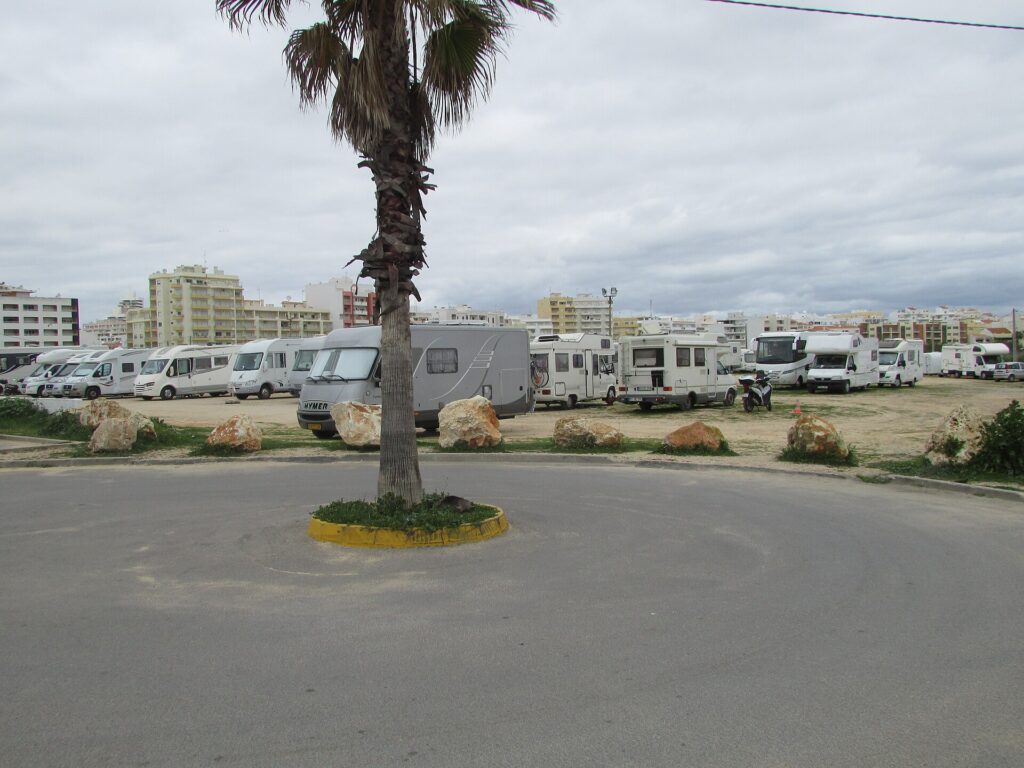
An overflow private park near a national park usually gains you hookups, longer sites, showers, laundry, and a reserved spot with more flexibility than an in-park campground. You trade a higher nightly rate and a drive into the park each day. For an RV that needs hookups or a long site, that trade is often the right one.
EV Charging on Long Park Drives
If you tow with an electric truck, or drive an electric vehicle to the park, charging becomes part of the overflow decision. Long park drives, remote entrances, and limited charging near some parks mean you should check charging options before you book, not after you arrive. A park with charging access, or a route with reliable charging stops, can matter as much as site length for an electric-vehicle trip. Plan charging stops conservatively, especially when towing, because range falls sharply under load and in cold or hilly conditions.
Check the Tow Match First
An overflow park that fits your rig still needs a truck that can safely tow it there. Length limits at the campground do not replace weight limits on the road. Before you book, run your truck and trailer through our towing calculator to check payload, tow rating, combined weight, and tongue weight together, including the 80% planning margin. A rig that fits the site but overloads the truck is still not a good match.
For park-specific fit, see our guides to camping in Yellowstone and camping in Montana and Glacier. Yellowstone shows the full-hookup question at its sharpest, and Glacier shows how a road restriction can matter as much as a campground limit.
Frequently Asked Questions
What is an overflow RV park?
An overflow park is a private park near a national park that serves campers when the in-park campground is full, or when the in-park sites do not fit their rig or hookup needs.
Why does Fishing Bridge matter for Yellowstone?
Fishing Bridge is the only full-hookup campground inside Yellowstone, with a 95-foot combined limit. A rig that needs full hookups or a long site in-park must plan around it or use an overflow park.
What is the difference between Mather and Trailer Village?
At the Grand Canyon, Mather offers sites of about 30 feet with no hookups, while Trailer Village offers full hookups with sites of about 50 feet. The right choice depends on your rig length and hookup needs.
Can a long rig drive the Going-to-the-Sun Road?
No. The Going-to-the-Sun Road in Glacier has a vehicle restriction of under 21 feet, separate from the Apgar campground limit of about 35 to 40 feet with no hookups. Plan driving routes separately from campground choice.
Fit the park to the rig, not the rig to hope. Check length, hookups, and road access before you book, and start with the full set of tools at Camp & Trail Guide tools.