By Camp & Trail Guide
If every campsite you want seems sold out, you are not imagining it. More than half of campers reported difficulty booking a campsite because campgrounds were full, according to the Dyrt 2026 research cited behind this guide. Popular parks, short seasons, and reservation windows that open months ahead combine to make the best sites disappear quickly — sometimes within seconds or minutes of release.
The answer is not to keep refreshing the same sold-out campground page. It is to understand how reservation windows actually work, to plan around them, and to have an overflow plan ready before the window opens. This guide explains the windows for four major parks as stated in the research, and the overflow alternatives that turn a sold-out park into a workable trip.
Why Campgrounds Fill So Fast
Demand is concentrated. Summer weekends, holiday weekends, and peak months draw far more campers than the parks can hold, and the most popular campgrounds have a limited number of sites. When a reservation window opens, thousands of campers compete for the same small set of sites at the same moment. That is why a site can be available at the second the window opens and gone a minute later.
Reservation Windows for Four Major Parks
Reservation windows differ by park, and getting the window wrong means missing the release entirely. The windows below are stated as they appear in the research behind this guide. Always confirm the current window with the park before you plan around it, because windows and release times can change.
Yosemite: 5 months ahead, on the 15th at 7 a.m. PT
Yosemite reservations open 5 months ahead on the 15th at 7 a.m. Pacific Time, and Valley summer sites sell out within seconds or minutes. That combination — a single monthly release moment and near-instant sellout — makes Yosemite the hardest reservation in the system for many campers. If you want a Valley summer site, you need to be ready at the release moment, with dates, site preferences, and backup dates already decided.
Yellowstone: Madison up to 13 months ahead
Yellowstone’s Madison campground opens up to 13 months ahead, a far longer window than Yosemite’s. That long window rewards planners who decide a year out, and it punishes last-minute planners who assume a Yellowstone site will still be available in spring for summer. If Yellowstone is your destination, check the Madison window first, not last.
Zion: Watchman 6 months ahead at 8 a.m. MT
Zion’s Watchman campground opens 6 months ahead at 8 a.m. Mountain Time. The six-month window is more forgiving than Yosemite’s five-month monthly release, but Watchman is still a popular campground in a park that now draws nearly five million visits a year. Being ready at the release time, with backup dates, still matters.
Grand Canyon: Mather, 6-month rolling release
Grand Canyon’s Mather campground uses a 6-month rolling release, with a peak season from 1 March to 30 November. A rolling release means new dates appear continuously rather than in a single monthly batch, so checking regularly for a specific window can pay off. It also means the most popular peak dates still disappear quickly, and a rolling window is not the same as availability.
The Overflow Concept: Private Parks and Dispersed Alternatives
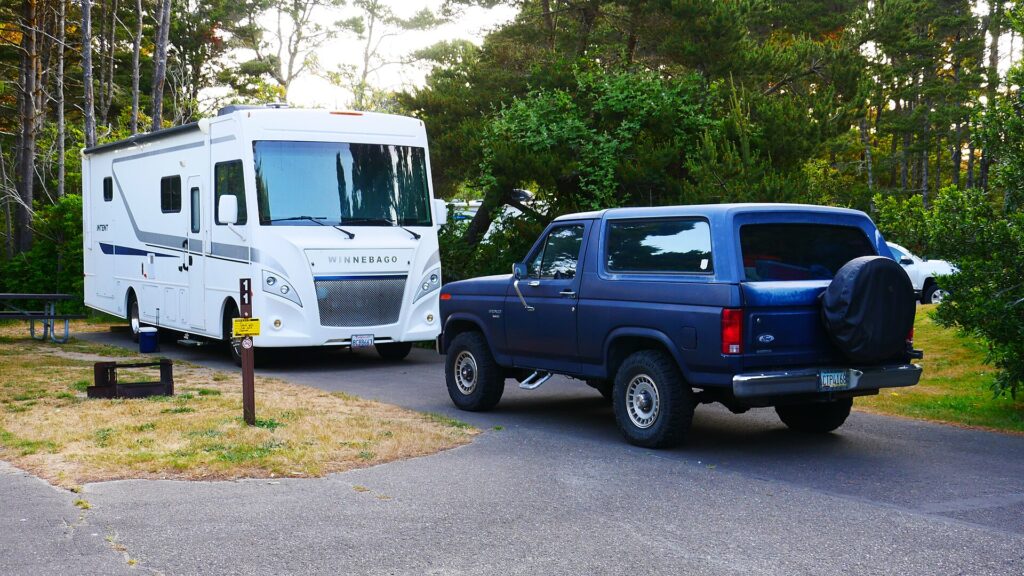
When the in-park campground is full, the trip is not over. The overflow concept — private parks plus national-forest and Bureau of Land Management dispersed alternatives near the park — is exactly the idea behind the Dyrt Neighbors concept, which highlights alternatives to fully booked parks. An overflow plan is not a consolation prize. For many campers, especially RV campers who need hookups or a longer site, a private park outside the park can be a better fit than the in-park campground itself.
National-forest and BLM dispersed camping near a park offers the opposite trade-off: free or very low cost, more space, and more self-sufficiency, with no hookups, water, or services. Dispersed camping near a popular park can be an excellent overflow option, provided you follow the local stay limits, fire rules, and road conditions for that specific area. Never assume a generic rule applies; check the forest or field office for your overflow area, just as you would for any dispersed site.
Building an Overflow Plan Before the Window Opens
- Decide your in-park target, your private-park backup, and your dispersed backup before the release moment.
- Know the release time and time zone for your park, and be ready with dates and alternatives.
- If the in-park site sells out, book the private-park backup the same day rather than waiting.
- For dispersed overflow, research the specific forest or BLM area, its stay limit, and its road conditions in advance.
- Consider a weekday or shoulder-season date as a first choice, not a fallback, if your schedule allows it.
- Split a longer trip: a night or two in-park if you can get it, plus overflow nights nearby.
- Keep checking for cancellations, especially for a rolling-release campground like Mather.
An overflow plan also changes how you budget. Private parks cost more per night, dispersed sites cost nothing for the site itself, and both change your fuel and driving time. Our trip cost calculator lets you compare those options on the same route, so a sold-out in-park site does not become an unbudgeted surprise.
For park-specific overflow planning, see our guides to camping in Yosemite and camping in Yellowstone. Both parks reward a backup plan, and both have private-park and dispersed alternatives that are worth knowing before the reservation window opens.
Frequently Asked Questions
Why do campsites sell out so fast?
Because demand is concentrated on peak months and weekends, and popular campgrounds have limited sites. More than half of campers in Dyrt 2026 research reported difficulty booking because campgrounds were full.
When do Yosemite reservations open?
Yosemite reservations open 5 months ahead on the 15th at 7 a.m. Pacific Time, and Valley summer sites sell out within seconds or minutes.
What is an overflow campground?
An overflow option is a private park or a national-forest or BLM dispersed alternative near a fully booked park. It is the Dyrt Neighbors concept: a workable base near the park when the in-park campground is full.
Is dispersed camping a good overflow option?
It can be, if you are self-sufficient and you check the local rules for that area. Dispersed sites offer free camping and space, but no hookups, water, toilets, or trash service.
A sold-out campground is a planning problem, not a cancelled trip. Build the overflow plan first, then chase the in-park site. You can compare the costs at Camp & Trail Guide tools.